
Too Embarrassed to Ask? That Crystal “Dumbbell” Is a Knife Rest — And It Has a Fascinating Story
 tehsinjani01@gmail.com
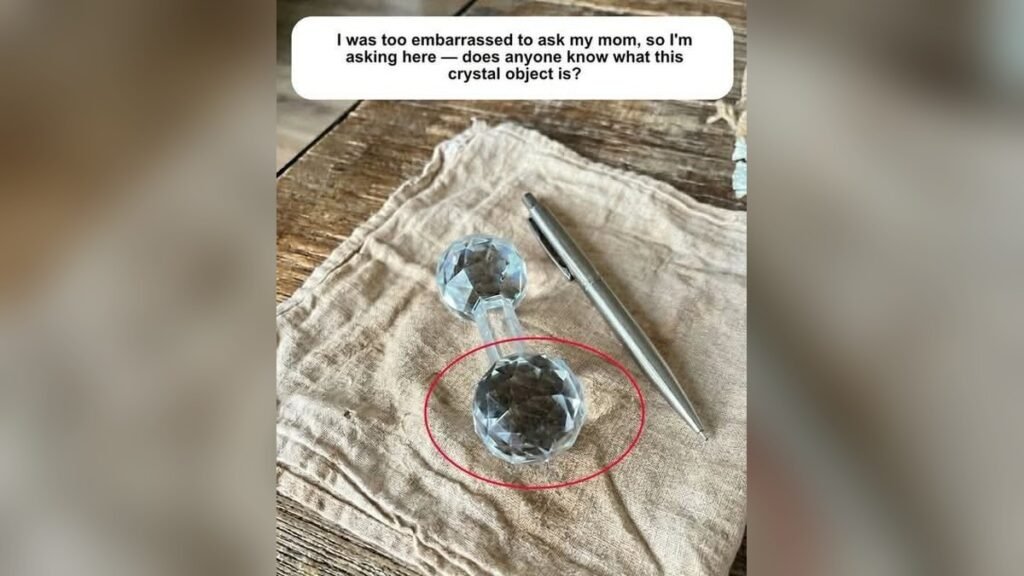
It looks like a tiny glass dumbbell. Two sparkling crystal balls joined by a short glass bar, small enough to sit next to a pen — and just mysterious enough that the person who found it was, in their own words, "too embarrassed to ask my mom" what it was. So they asked the internet instead, and joined a long tradition: this little object confuses almost everyone who discovers one in a drawer, a china cabinet or a box of inherited tableware.
Here is the answer, with no embarrassment required: it is a knife rest — specifically, a vintage crystal knife rest in the classic "dumbbell" or "barbell" style. A century ago it sat on the finest dining tables in the world, doing one small, elegant job. Today it is a forgotten piece of dining history, and its story says a lot about how dramatically our meals have changed.
The Short Answer
A knife rest is a small stand placed beside your plate during a formal meal. When you pause between bites or courses, you lay your used knife across it — blade resting on the bar — so the dirty blade hovers above the table instead of touching the cloth. The crystal dumbbell shape in the photo is one of the most popular designs ever made: the two heavy faceted balls keep it stable, and the raised middle bar holds the knife. That is the whole secret. Nothing scandalous, nothing strange — just Victorian-era table manners in glass form.
Why Did Anyone Need a Rest for a Knife?
To understand the knife rest, picture a formal dinner a hundred years ago. Meals could run to many courses. Tablecloths were fine white linen — expensive, labour-intensive to wash, and a point of household pride. And guests typically kept the same knife through much of the meal rather than receiving a fresh one with every course.
That created a small but real problem: where does a buttery, sauce-covered knife go while you talk, sip or wait for the next course? Lay it flat on the linen and it leaves a stain. Balance it against the plate and it can slide, clatter or drip. The knife rest solved it neatly. The knife lies across the little bridge, its used blade suspended in the air, the tablecloth stays spotless, and the table looks orderly. It also quietly saved work in an age when every extra utensil meant more washing by hand.
A Brief History of the Knife Rest
Knife rests are older than most people guess. Early versions existed centuries ago — simple rests from the era of Henry VIII were typically wooden — and they became truly popular in the 19th century, when formal dining reached its most elaborate heights. Victorian hosts treated the table as a stage: matching sets of tableware, sparkling glass and silver, and accessories for almost every imaginable purpose.
Craftsmen made knife rests from nearly everything: silver, brass and other metals, pottery, porcelain, mother-of-pearl, ivory, horn, glass — and, most glamorous of all, cut crystal. Sets of six or twelve were standard, kept in the china cabinet and brought out for dinner parties and holidays. The dumbbell form, with its two chunky ends, was a favourite because it was stable, hard to knock over and showed off the glass-cutter's skill. French makers became especially associated with fine crystal rests — the porte-couteau — and elegant crystal examples from Paris antique markets are still traded today. The style lived on through the Art Deco years and into the mid-20th century; vintage cut-crystal rests from the 1950s, with faceted spherical ends and a ridged central stem, are now sold as collectables.
Why Crystal? Why the Dumbbell Shape?
Every detail of the object in the photo is functional, even the sparkle. The two end balls are faceted — cut with many small flat surfaces — so they catch candlelight and lamplight and glitter on the table, turning a practical tool into jewellery for the table setting. Their weight matters too: a knife is heavy at the handle, and the solid crystal ends anchor the rest so it does not tip or slide on polished wood or linen. The short connecting bar raises the knife blade just high enough to clear the cloth. Even the size is deliberate — typical crystal rests are roughly 9 to 10 centimetres long, about the length of the one beside the pen in the photo: long enough for a dinner-knife blade, small enough to sit unnoticed beside a plate.
Why Did Knife Rests Disappear?
In a word: life got casual. Multi-course formal dinners gave way to quicker, simpler meals. Families stopped ironing white linen tablecloths — many stopped using tablecloths altogether — and dishwashers and cheap stainless cutlery made it effortless to give every course a fresh knife. As the problem vanished, so did its solution. Within a generation or two, the shared knowledge evaporated: grandparents knew exactly what the glass dumbbell was; their grandchildren found it in a cupboard and turned to the internet, slightly embarrassed to ask.
That is also why these objects keep going viral. They are beautiful, puzzling and just unusual enough to make people wonder whether they are something exotic — a massage tool, a piece of gym equipment for dolls, a curtain accessory. The truth is more charming: they are table manners, preserved in crystal.
Found One? What To Do With It Today
If you have inherited or discovered a crystal knife rest, you have options. Use it for its original job: a set of rests instantly makes a dinner table feel deliberate and elegant, and guests always ask about them — which is half the fun. Use it as a chopstick rest, a rest for a serving spoon, or a pen rest on a desk. Display it where light hits it; cut crystal earns its keep by sparkling. Collectors do buy vintage examples, especially clean, chip-free cut crystal and matched sets, though most single rests are modest in price — their real value is charm and conversation.
A little care goes a long way: wash crystal by hand in warm, mild soapy water rather than risking the dishwasher, dry it with a soft cloth to keep it brilliant, and check the faceted ends for tiny chips, the most common flaw in old pieces.
How To Recognise a Knife Rest
Not sure whether the object in your drawer is a knife rest or something else? Check for these clues: it is about 8 to 12 centimetres long; it has two raised ends with a lower bridge or bar between them; it is surprisingly heavy for its size if made of crystal or solid glass; and it often turns up in sets, or stored with cutlery and serving pieces rather than with tools or ornaments. Match those signs and you are almost certainly holding a knife rest — the same conclusion the internet reaches, every time, once the embarrassment wears off.
Frequently Asked Questions
What is the crystal dumbbell-shaped object in the photo?
It is a vintage crystal knife rest in the "dumbbell" or "barbell" style — a formal dining accessory used to hold a used knife above the tablecloth between bites and courses.
When were knife rests used?
Simple rests existed centuries ago, but they became popular in the 19th century and were common in formal dining sets through the Victorian era, the Art Deco period and into the mid-20th century.
How do you use a knife rest?
Place it beside or above your plate, horizontally. When you are not using your knife, lay the knife across it so the blade rests on the bar and stays off the table surface.
Are old crystal knife rests valuable?
Matched, chip-free cut-crystal sets from good makers can interest collectors, but most single rests sell for modest amounts. Their main value today is decorative charm and the story they carry.
Sources and Further Reading
- "Setting the Table" curiosities guide — Castle Leslie Estate table-setting guide
- "10 Brilliant Victorian Era Cutlery Innovations" — knife rest history and materials (mytour.vn)
- Vintage 1950s cut crystal knife rest listing, with measurements and design details — Etsy (etsy.com)
Found another mystery object in a drawer? Explore more everyday mysteries in our Weird Facts and Human Body Mysteries categories — and see what else science says about the world around you.