
According to Science, Kelly Brook Has the “Perfect” Body — Here’s What the Research Really Says
 tehsinjani01@gmail.com
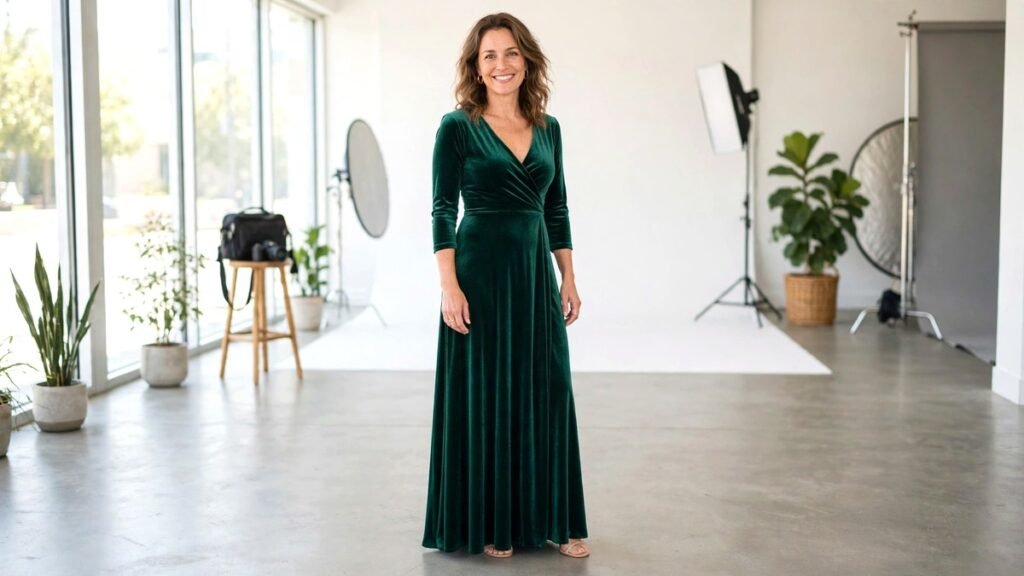
You have probably seen the headline. It races around social media every year or so, usually next to a glamorous photo: "According to science, this 43-year-old model has the perfect body — but wait till she turns around…" The post teases you to click, scroll and hunt for a photograph. But behind the teasing headline is a genuinely interesting story about how scientists study attraction — and it is not quite the story the viral posts tell.
The model is Kelly Brook, the English model, actress and radio presenter whose natural, curvy figure has made her the internet's favourite example of "scientific perfection" for over a decade. So what did the research actually find, why does her name keep coming up, and can science really declare one body "perfect"? Let's separate the facts from the viral fiction.
The Short Answer
The claim traces back to real research on body proportions — especially the waist-to-hip ratio — much of it pioneered at the University of Texas at Austin. In study after study, people rated figures with a waist-to-hip ratio of around 0.7 as the most attractive. Media reports then compared those "ideal" numbers with Kelly Brook's proportions, found a close match, and a legend was born. No university ever officially crowned her, and no serious scientist claims one body is perfect for everyone. But the research underneath the headline is real, and it explains a lot about why we find certain shapes appealing.
Who Is Kelly Brook?
Kelly Brook was born Kelly Anne Parsons on 23 November 1979 in Rochester, Kent, England. She began modelling as a teenager in the 1990s and quickly became one of Britain's best-known models, famous for a glamorous, curvaceous look at a time when the fashion industry mostly celebrated extreme thinness. In 2005 she was crowned FHM's Sexiest Woman in the World, and she went on to build a long career as an actress and presenter, appearing in films such as The Italian Job (2003) and Piranha 3D (2010), and co-presenting Heart London's Drivetime radio show since 2019.
She married her long-time partner, French model Jeremy Parisi, in Italy in July 2022. The viral "43-year-old" headlines date from around 2023, when she was that age — she is now 46. Throughout her career, Brook has been refreshingly relaxed about her body. In interviews she has spoken openly about getting older and her shape changing over the years, and about the entertainment industry becoming kinder and less judgemental than it once was. That confidence is part of why the "perfect body" story sticks to her so well: she has never fitted the industry's narrow mould, yet the science keeps being quoted in her favour.
The Numbers Behind the Viral Claim
The figures that circulate with the story go like this: an "ideal" body mass index (BMI) of about 18.85, a bust of about 93 cm, a waist of about 61 cm and hips of about 87 cm — producing a waist-to-hip ratio between 0.65 and 0.75. Reports then point out that Brook's proportions, at about 5 foot 6 inches (168 cm) tall with natural curves, sit right inside that favoured range, and that she achieved the look without the cosmetic surgery or extreme dieting often associated with fame.
Treat those exact centimetres with a little caution. They come from media write-ups of attractiveness research rather than from a single published "perfect body" paper, and a real person's measurements naturally change across a 30-year career. What is solid is the ratio underneath the numbers — and that is where the real science lives.
The Real Science: The Waist-to-Hip Ratio
In 1993, psychologist Devendra Singh of the University of Texas at Austin published a landmark paper, "Adaptive significance of female physical attractiveness: Role of waist-to-hip ratio," in the Journal of Personality and Social Psychology. Singh showed volunteers line drawings of female figures that varied in body weight and in waist-to-hip ratio — the waist measurement divided by the hip measurement. Again and again, figures with a ratio of about 0.7 were rated the most attractive, the healthiest-looking and the most desirable.
Follow-up studies by Singh and others found the same pattern in many different groups, and later brain-imaging research suggested the hourglass figure even activates reward-related areas of the brain. Evolutionary psychologists offer an explanation: fat distribution is not random decoration. A lower waist-to-hip ratio has been associated in research with hormonal balance, lower risk of several diseases and reproductive health — so, the theory goes, our brains learned to read the ratio as a quick visual signal of health. In a related study, even physicians judging drawings relied on the ratio when rating figures for healthiness and reproductive capability, rating normal-weight figures with ratios of 0.7 and 0.8 highest.
In other words, the famous hourglass is not just a fashion invention. Proportions genuinely do influence first impressions — and that kernel of truth is what powers the Kelly Brook headline.
So Why the "Wait Till She Turns" Tease?
The original posts promise a shocking photograph — usually implying that when the model turns around, you will see something surprising. Here is the honest version of that surprise: there is no trick photo. The "shock" the headline writers are selling is simply that the woman science supposedly crowned is not a size-zero runway model. She is a naturally curvy woman in her forties, in an industry that spent decades insisting beauty meant being as thin as possible. When she turns, you see the hourglass silhouette the ratio research describes — a defined waist and balanced curves. The reveal is not a scandal; it is a challenge to an outdated standard.
Why "Perfect" Is Still the Wrong Word
Before we hand science a crown it never asked for, four honest cautions.
First, one person's proportions were never put to a scientific vote. Researchers measured preferences for drawings, photographs and numbers; journalists matched the results to a celebrity. That is a fun comparison, not a coronation.
Second, preferences vary. Across cultures, the favoured waist-to-hip ratio in studies ranges roughly from 0.6 to 0.8, and ideals shift with era and environment. The hourglass icons of the 1950s, the ultra-thin look of the 1990s and today's athletic builds were all "perfect" in their moment — which tells you perfection is partly fashion wearing a lab coat.
Third, attractiveness research mostly measures first impressions of strangers. It says little about charisma, kindness, humour or presence — the things that actually make a real person magnetic, and the qualities that have kept Brook on television and radio for nearly 30 years.
Fourth, BMI and ratios are rough population tools, not personal report cards. A number that looks "ideal" in a study does not grade any individual body's health or worth — including yours.
The Healthy Takeaway
If this story has a moral, it is a reassuring one. The research behind the viral headline suggests that the body type the fashion industry once dismissed as "too curvy" is precisely the type human beings have rated as attractive all along. Beauty standards sold by magazines are narrower than the preferences science actually measures. Kelly Brook's three-decade career — from teenage model to radio presenter in her forties — is less a story about perfect measurements and more a story about the appeal of looking natural, healthy and at ease in your own skin.
So yes, according to the numbers quoted from science, Kelly Brook has something close to the "perfect" body. The more interesting truth is that science never promised perfection at all. It simply showed that attractiveness is drawn to balance and proportion — and that there has always been more than one way to be beautiful.
Frequently Asked Questions
Did a university really name Kelly Brook's body the most perfect?
Not officially. The claim comes from media reports comparing her proportions with published research on attractiveness — especially waist-to-hip ratio studies from the University of Texas at Austin. The comparison went viral, and the headline shortened it to "science says."
What waist-to-hip ratio do studies find most attractive?
In many studies, a ratio of about 0.7 receives the highest attractiveness ratings, though preferences vary by culture and context, roughly between 0.6 and 0.8.
How old is Kelly Brook now?
She was born on 23 November 1979, so she is 46. The widely shared "43-year-old model" headlines date from when those posts first spread, around 2023.
What were the "ideal" measurements in the viral reports?
Reports cited a BMI of about 18.85 with measurements of roughly 93 cm bust, 61 cm waist and 87 cm hips. These figures come from media summaries of attractiveness research, not from one definitive study, so treat them as approximate.
Sources and Further Reading
- Kelly Brook biography and career — Wikipedia (en.wikipedia.org)
- Singh, D. (1993), "Adaptive significance of female physical attractiveness: Role of waist-to-hip ratio," Journal of Personality and Social Psychology — background via the Devendra Singh biography, Wikipedia
- Singh, D. (1994), "Waist-to-hip ratio and judgment of attractiveness and healthiness of female figures by male and female physicians," International Journal of Obesity — PubMed (pubmed.ncbi.nlm.nih.gov)
If you enjoyed this, explore more in our Human Body Facts and Human Body Mysteries categories — including how your body changes while you sleep.