
The “Toronto Server” Who Went Viral for Her Looks Does Not Exist — the Photo Is an AI Fake
 Beyond Facts Team

The collage is engineered to stop your thumb: a smiling young server behind a food counter, photographed from the side, waving at the camera in a circular inset — and a headline that does the rest. “This Toronto server just went viral for her looks, and companies are now offering her better jobs.” Underneath, the bait question: “What kind of jobs?” Below that, tens of thousands of comments answering it.
Here is the problem. There is no Toronto server. There is no viral moment, no restaurant, and no queue of companies offering anybody a job. The woman in these pictures does not exist — the images are AI-generated, and the story wrapped around them was invented by content farms.
The claim, and what is missing from it
Real viral stories leave footprints. When a real server, cashier, or delivery driver genuinely goes viral, the internet learns their name within hours. A local news crew shows up. The restaurant gets tagged, reviewed, and interviewed. Follow-up videos appear. That is how every genuine “viral worker” story of the last decade has unfolded.
This story has none of that. The collage has been reposted by dozens of Facebook pages since mid-October 2026, always with the same few lines of text, and in all that time not one version has named the woman, the restaurant, the street, or a single company supposedly offering her work. No Toronto news outlet — not one — has reported a local server going viral. The only source stamped on the image is a content-farm watermark, “lateststories.info,” a site in the business of manufacturing exactly this kind of post. A story with a city but no names is not a news story. It is a template.
The pictures give themselves away
Look at the collage the way a photo editor would, and it falls apart.
The anatomy is impossible — and it changes between panels. In the right-hand photograph, the woman’s chest is rendered as a single, perfectly rounded shape that defies gravity and bears no relationship to clothing, posture, or the human body. In the side-view panel, her proportions are noticeably different again. A real person’s body does not reshape itself between two photographs taken minutes apart. An AI image model, generating each panel separately, has no memory of what it drew last time — and it shows.
The setting melts at the edges. The food counter, glass panels, and kitchen equipment behind her blur into the soft, smeared detail typical of generated imagery: fixtures that almost make sense, switches and trays that resolve into nothing when you look closely. Real restaurant photography is cluttered and specific. This background is a suggestion of a restaurant, not a photograph of one.
The question is the tell. “What job would you offer her?” is not a caption — it is a comment-harvesting device. The farms know the answers will be crude, plentiful, and great for reach. The woman was generated to be looked at, the story was written to be argued with, and both were built for the same reason we have documented before: engagement. It is the same machinery behind the AI-generated bikini photograph falsely presented as a leaked picture of WWE star Bayley (topwresler.site) and the inflated follower story built around Billie Eilish (topwresler.site).
Why farms keep generating “viral workers”
The formula is cheap and it works. A generated image costs nothing and can never complain, sue, or be identified. An attractive fictional worker plus a rags-to-riches hook (“companies are offering her better jobs!”) gives every viewer something to react to — admiration, outrage, jokes, arguments about whether looks should matter at work. Every reaction is reach, and reach is money. The Toronto detail is there because a named city makes a template feel like news; commenters under some reposts have already argued about whether the setting even looks Canadian.
There is a quieter cost worth naming. Real servers — real people doing a hard, underpaid job — get photographed and posted without consent often enough. A internet trained on fake versions like this one learns to treat every worker’s image as content and every comment section as a free-for-all. The fictional woman cannot mind. The habits the post trains are practised on real people next.
How to spot the next one
Three checks take ten seconds. One: search the claim — if a person “went viral,” real coverage with a name exists, and if all you find is the same image on copycat pages, that is your answer. Two: compare the panels — generated sets cannot keep a body, a face, or a room consistent from one image to the next. Three: read the caption for missing nouns — no name, no business, no date is not mystery, it is manufacture.

The verdict
The woman: not a real person — an AI-generated figure, inconsistent between panels, with anatomy no camera has ever recorded.
The story: invented. No Toronto server went viral, and no companies offered her anything. The claim appears only in content-farm posts recycling the same collage since October 2026.
The photo: a fabrication, which is why this article illustrates the story with artwork rather than republishing the collage as if it were a photograph of someone.
Frequently Asked Questions
Is the Toronto server real?
No. The images are AI-generated. The woman’s proportions change between panels, the background dissolves into generated mush on close inspection, and no real-world trace of her exists.
Did companies really offer her jobs?
There is no evidence of any offer, because there is no identifiable person, restaurant, or company in the story. The job-offers line is part of the template.
Why does the post ask “What job would you offer her?”
To harvest comments. Questions that invite suggestive answers produce high comment counts, which is what the posting pages are farming.
Where did the collage come from?
It carries a content-farm watermark (lateststories.info) and has been recycled by dozens of Facebook pages since mid-October 2026, with identical wording and no added facts.
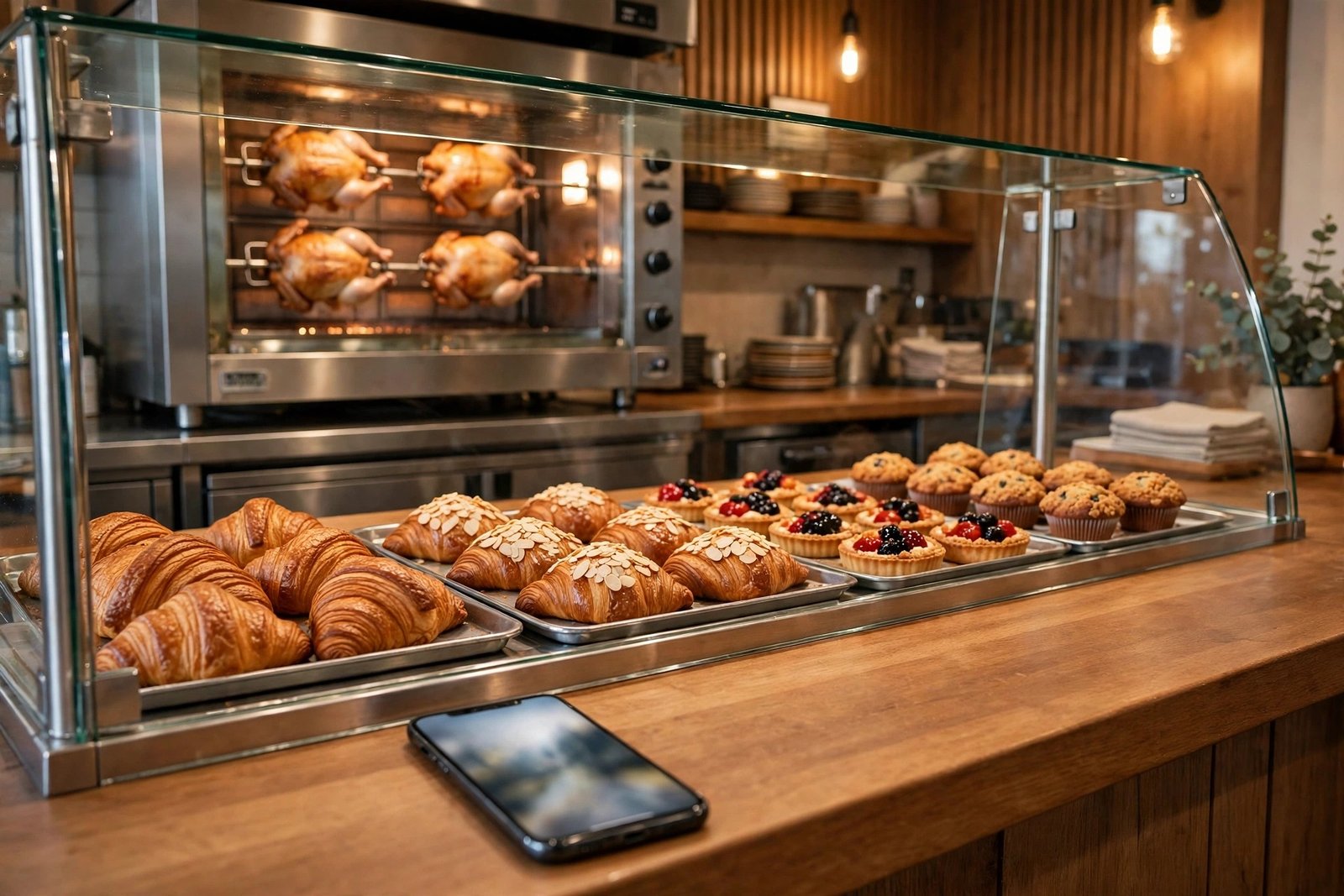
About the images in this article: the featured image and the illustrations inside are AI artwork made for this story — a reader’s reaction beside a generic café counter scene. The original collage is not reproduced, because it is a sexualised fabrication presented as a real person.
Sources: earliest and repeated Facebook postings of the collage, e.g. — facebook.com ; video repost with the same claim — facebook.com






1 thought on “The “Toronto Server” Who Went Viral for Her Looks Does Not Exist — the Photo Is an AI Fake”