
The “$181 Million Lottery Winner Who Found Love in Two Days” Is a 17-Year-Old Internet Joke — Not a News Story
 Beyond Facts Team
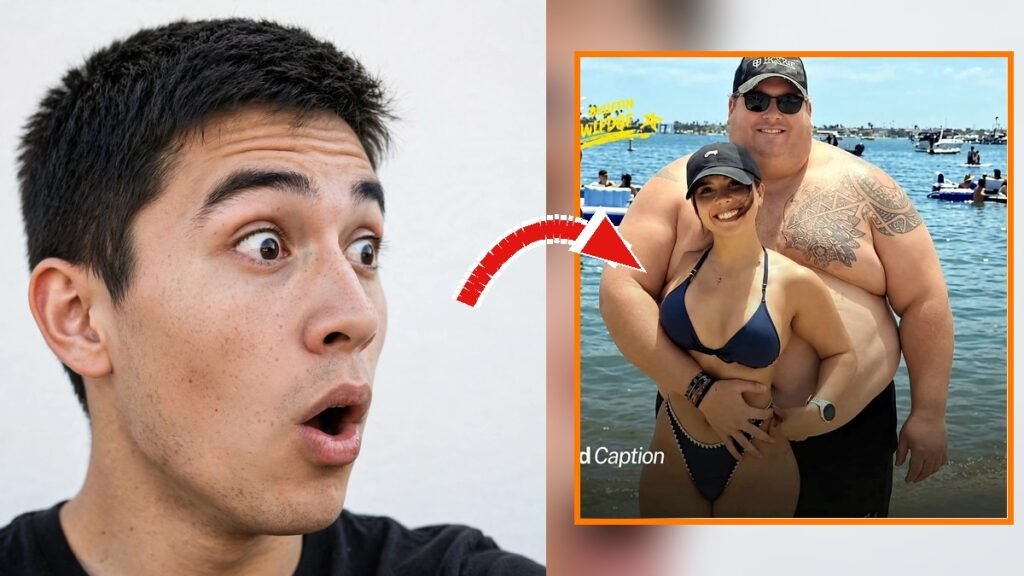
The photograph is built to start an argument: a big, tattooed man in a baseball cap beaming in the shallows, arms around a smiling woman in a bikini, boats and paddleboarders behind them. Over it, a headline written like news: “A $181 million lottery winner reportedly found the love of his life just two days after winning the jackpot.”
It sounds like a story. It has a number, a twist, and a couple you can judge. What it does not have is any truth. No identified man won $181 million and met a girlfriend two days later. The claim is not a 2026 news story at all — it is one of the oldest lottery jokes on the internet, and it has been running, word for word, since at least 2009.
The joke is older than the photo by 17 years
The original version of this meme appeared online by March 2009: a photograph of a pink-faced, heavyset man with an attractive blonde woman, captioned, in essence: “Can you believe it? This guy wins $181 million in the lottery on a Wednesday, and then finds the love of his life just two days later.” The punchline was never subtle — the joke is that the timing gives the game away, that money, not romance, did the work. Fact-checkers examined the claim years ago and found exactly what you would expect: no such winner, no such romance, nothing but a funny caption glued to a stranger’s photograph.

The wording has barely changed since. A Lottery Post blog entry dated April 14, 2015 was already repeating — and already questioning — the same claim: a $181 million winner who had “found the love of his life” two days after the jackpot. The number never updates, the “two days” never updates, because it was never reporting. It is a joke with a headline’s costume on.
The couples keep changing because there is no couple
If the story were real, the photograph would be fixed: one winner, one partner, one famous picture. Instead, the image keeps being swapped. The 2009 original showed one couple; the versions spreading in November 2026 show entirely different people — including the tattooed man and the woman in the navy bikini in the photograph above. Nobody sharing it knows who they are, where the picture was taken, or whether either of them has ever bought a lottery ticket. They are, as far as any evidence shows, an ordinary couple whose holiday photograph was lifted because it fit the joke’s shape: his size, her smile, and a contrast the comments could be trusted to sneer at.
That is the engine of the whole thing. The posts do not need a real story; they need a photograph that makes strangers say “gold digger” in the comments — and under the current reposts, that is overwhelmingly what the comments say, about a real woman who never claimed to meet anyone after any jackpot.
The farms have started inventing names
The newest layer is worse than the old joke. In recent weeks, content-farm sites have begun padding the meme with full fictional short stories: the winner gets a name (one version calls him Mark, another Daniel Mitchell), a biography, a gas-station ticket, a sister he phones, a beach, a lost paddleboard, a third date. The details contradict each other from site to site because they are being made up on the spot. What began as an obviously cynical caption is being republished as heart-warming “news,” complete with people who do not exist.
The coincidence that revived it in 2026
There is a reason the meme roared back this year, and it is a genuinely strange one. On March 10, 2026, a UK EuroMillions ticket really did win a jackpot of £181,073,415.70 — almost exactly the meme’s famous number, in pounds rather than dollars. The winner chose anonymity, as big UK winners are allowed to do, and nothing about them has been publicly connected to any romance. But the coincidence handed the farms a gift: a real £181 million win in the headlines, and a 17-year-old “$181 million” joke ready to be illustrated with any couple’s photograph and mistaken for a report about it.
Why it will outlive us all
The meme survives because it flatters its audience twice. It lets you feel worldly-wise — of course she appeared after the money — while pretending to be a news item you are merely passing along. It never ages because it was never tied to an event; it needs no updating, no corrections, no names. And every new platform generation meets it fresh, argues about it fresh, and shares it fresh. It is the same machinery we documented in the invented “Toronto server” story (topwresler.site): a photograph, a too-perfect claim, and a comment section doing the distribution for free.

The honest summary for the couple in this week’s version is simple. There is no evidence the man won anything, no evidence the woman met him two days after anything, and no kindness in a joke that has spent 17 years inviting strangers to call somebody’s partner a gold digger. The only thing that actually happened here is the oldest one on the internet: a funny caption outlived everyone who first laughed at it.
The verdict
The claim: fabricated. No $181 million winner has ever been identified as finding “the love of his life” two days after a jackpot.
The story’s age: the caption dates to at least 2009 and was being recycled — and questioned — by 2015.
The photo: an unrelated couple’s picture, the latest of several swapped under the same words. The people in it are unidentified and have no known connection to any lottery.
The 2026 jackpot: real but separate — an anonymous UK EuroMillions winner took £181,073,415.70 on March 10, 2026. No romance, no photograph, no connection to the meme.
Frequently Asked Questions
Did a lottery winner really find love two days after winning $181 million?
There is no evidence it ever happened. No winner matching the story has been identified in 17 years of the claim circulating.
Where did the story come from?
It began as a joke caption on a viral photograph by 2009, and has been reposted ever since with the same $181 million figure and the same “two days later” punchline.
Who are the couple in the current photo?
Nobody knows. They are unidentified, and their photograph is simply the latest image placed under the old caption. Nothing connects them to any lottery win.
Was there really a £181 million jackpot in 2026?
Yes — a UK EuroMillions ticket won £181,073,415.70 on March 10, 2026. The winner stayed anonymous, and the win has no connection to the viral story.
About the images: the photograph in this article is the viral image currently being shared with the claim, shown because it is the subject of the fact-check. The featured image frames it beside an AI-illustrated reader’s reaction.
Sources: the long-running debunk of the original meme, summarised at — story.dimoday.com ; the meme’s 2009 origins — infinigsa.weebly.com ; a current repost of the claim — facebook.com