
The Strange Lumps on That Viral Pizza Are Chicken Hearts — a Topping Millions Order on Purpose
 Beyond Facts Team
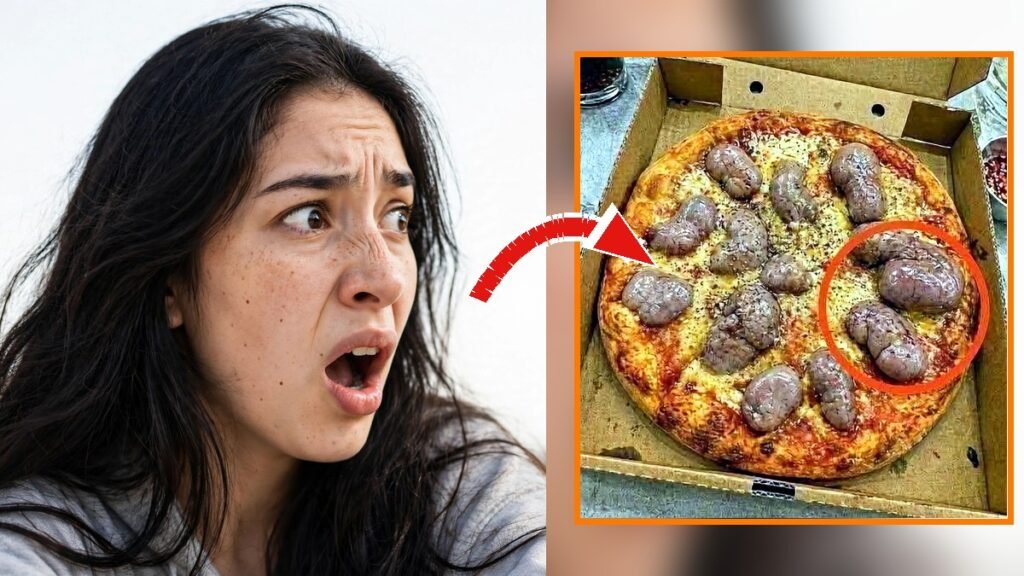
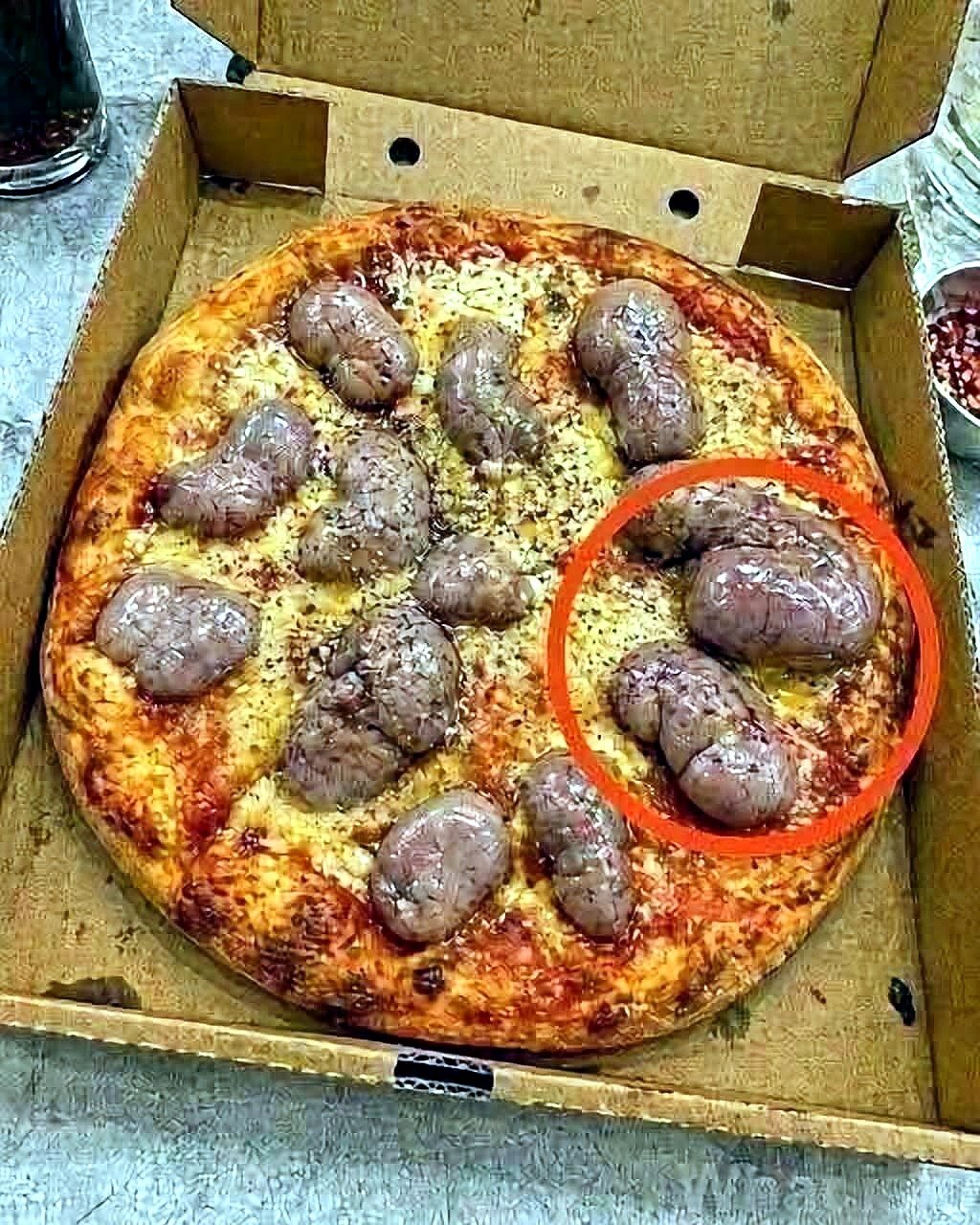
The post has been doing the rounds again: someone orders a pizza for the evening, opens the box in the kitchen, and freezes. Scattered across the cheese are a dozen smooth, purplish-brown lumps, each about the size of a large grape, one cluster of them helpfully circled in red. Brains? Kidneys? Something nobody wants to name at the dinner table? “Does anyone know what this is?” the caption asks. “Check the first comment for the answer.”
Here is the answer, without making you check anything: those lumps are chicken hearts — whole, cooked chicken hearts, used as a pizza topping. And while that sounds like a prank, it is not a mistake, a contamination, or a dare. In the country where this style of pizza is at home, people order it that way on purpose, and pay extra for the privilege.
How you can tell they are chicken hearts
Look at the pieces one by one and the mystery dissolves. Each lump is small and remarkably uniform — roughly two to three centimetres long, the size hearts are when they come from ordinary chickens. Each has the same smooth, rounded, slightly two-lobed shape, tapering a little at one end, with the pale nub where the fat cap and vessels were trimmed. They shine because heart is dense, lean muscle that turns glossy when cooked, and they hold together in neat whole pieces because a heart is a single compact organ, not sliced meat.
That combination rules out the comment-section favourites. Kidneys are bigger, bean-shaped, and usually sliced. Brains are pale, soft, and folded like cauliflower — nothing like these firm, dark pieces. Gizzards are tougher, thicker, and almost always cut up. Whole hearts, cooked until they darken and glisten, look exactly like what is sitting on that pizza — because a heart is basically a fist of pure muscle, and it cooks like one.
Where a chicken-heart pizza is completely normal
To understand the pizza, start with the barbecue. In Brazil, grilled chicken hearts — coração de frango — are not an exotic stunt food. They are one of the most beloved items in churrasco, the Brazilian barbecue tradition, and the star of espetinhos de coração, skewers of seasoned hearts grilled over charcoal at street fairs, bars, and family gatherings, especially in the country’s south. Dozens of hearts are threaded onto a skewer, salted or marinated with garlic and lime, and grilled until charred outside and juicy inside, then eaten standing around the grill with farofa and a cold drink while the big cuts of beef cook slowly behind them.

The tradition runs deep. Brazil’s nose-to-tail cooking — miúdos, the organ meats — was shaped over centuries by Indigenous, Portuguese, and African influences, and hearts were prized rather than discarded: cheap, flavourful, and rich. In a Brazilian churrascaria today, a skewer of glistening chicken hearts arriving at your table is as ordinary as the sausages. And in a country that puts practically everything on pizza — Brazil is famous for some of the most creative pizza toppings on earth — chicken hearts made the jump from the skewer to the pizza menu. A pizza de coração is simply what happens when two national favourites meet.
Nor is Brazil alone. In Japan, chicken hearts (hatsu) are a standard skewer on yakitori menus. In Peru, grilled heart skewers — anticuchos, traditionally beef heart — are a national street-food institution. Across much of Asia, Africa, and Latin America, the heart is treated as what it is: one of the most flavourful, least wasteful cuts on the bird.
What they actually taste like
If the identification shocked you, the taste would not. Chicken hearts are famously the mildest of the organ meats, because they are almost all muscle. Cooked properly — marinated, then grilled hot and fast — they are firm and slightly chewy, with a rich, dark-meat flavour closer to chicken thigh than to liver, and none of the strong, metallic taste people fear from offal. They are also genuinely nutritious: hearts are packed with protein, iron, zinc, and vitamin B12, and are a notable source of coenzyme Q10 — though, like most organ meats, they are rich enough that most people enjoy them as an occasional treat rather than a daily staple.
Why this photo keeps coming back
One last layer of the mystery is the post itself. The photograph has been circulating in gross-out posts since at least October 2026, shared by page after page — some as a photo, some as a slow-zoom video — with the same “I ordered a pizza in the evening…” story pasted on top and the same promise that the answer hides in the first comment. In other words, the personal story attached to it is as recycled as the picture. Whoever first photographed that pizza most likely knew exactly what was on it, and quite possibly ordered it that way. The performance of horror is the product; the hearts are just the cast. It is the same “what is this thing?” formula that once turned a crystal dumbbell into a Victorian knife rest (topwresler.site) and a pair of heavy metal “pinecones” into cuckoo clock weights (topwresler.site).
So the next time the box opens on something strange, remember the twist: sometimes the “what is that?!” topping is not an accident in the kitchen. Sometimes it is a delicacy with its own name, its own skewers, and a few hundred million fans.
The verdict
The topping: whole cooked chicken hearts — identified by their small uniform size, smooth two-lobed shape, trimmed fat-cap nub, and glossy dark finish.
The pizza: a real style, rooted in Brazil’s chicken-heart barbecue culture, where hearts are a celebrated staple rather than an oddity.
The viral story: the photo is genuine food photography of a real topping, but the “shocked customer” caption travelling with it is a copy-paste engagement hook recycled by many pages.
Frequently Asked Questions
What are the lumps on the viral pizza?
They are whole cooked chicken hearts. Their small, uniform size, smooth lobed shape, and dark glossy surface are the giveaways — hearts are dense muscle, so they cook into neat, firm, shiny pieces.
Are chicken hearts safe and normal to eat?
Yes. Chicken hearts are a traditional food in Brazil, Japan, Peru, and many other countries, eaten grilled on skewers, sautéed, and on pizza. Like any meat, they simply need to be cooked through.
What do chicken hearts taste like?
Mild and rich — firm, slightly chewy dark meat, much closer to chicken thigh than to liver. They are usually marinated with garlic, lime, and salt, then grilled.
Where does chicken-heart pizza come from?
Brazil is the natural home of it: chicken hearts (coração de frango) are a cornerstone of Brazilian barbecue, and Brazilian pizzerias are famous for turning beloved local ingredients into pizza toppings.
About the featured image: it shows the viral photograph itself, which is the subject of this article, presented in a frame alongside an AI-illustrated reader’s reaction.
Sources: Beryl Shereshewsky on espetinhos de coração — beryl.nyc ; Avenida Brasil on espetinho street skewers — avenidabrasil.nl ; Meat Chef Tools on chicken hearts around the world — meatcheftools.com ; Chopped, grilled chicken hearts recipe — chopped.com